
It's Bed Bug Season Again in Philadelphia— A Pest Control Expert Answering Your Questions Before You Ask Them
Summer is bed bug season. People travel, stay in hotels, visit family, and bed bugs hitchhike. With Philadelphia hosting FIFA World Cup matches this summer, the region is seeing an influx of travelers, and that could mean increased exposure risk of bed bugs for residence and visitors alike.
Bed bugs trigger a panic response unlike any other pest. So before you spiral, let me answer the questions you're about to ask.
How did I get bed bugs?
That's actually the wrong question.
When bed bugs are discovered, the blame game starts. It's the kids. It's the neighbor. It's the friend who stayed over last weekend. Everyone's pointing fingers. The blame game doesn't help and makes the event more traumatic.
It doesn't matter how they got there. Bed bugs are exceptional travelers. They hitchhike on luggage, clothing, furniture, and bags. They move through wall voids in apartment buildings. They can come from a five-star hotel just as easily as anywhere else. Clean houses get bed bugs. Spotless people get bed bugs.
I once picked up a bed bug at a Wawa on free coffee day.
I was waiting at the ATM and saw something I thought was a fuzzy on my wool coat. I went to pick it off and it moved. I got a bed bug getting coffee at a Wawa? I tell this story to illustrate how easy it is to get bed bugs. No one sleeps at a Wawa so it must have come from another customer crowded around the creamer station.
How do I know if I have bed bugs?
Physical evidence
Other than bites what you may find:
Live adults — roughly the size and shape of a tick. They are dorso-ventrally flattened, meaning flat and round in shape. Think of the circumference of a pencil eraser, maybe slightly smaller. Flat, reddish brown. Adults are visible. The nymphs are difficult to see — a first instar nymph just after hatching is smaller than an ant and nearly translucent.
Cuticles — shed skins left behind as bed bugs molt. They look like hollow dead bugs. The more you find, the longer the infestation has been established.
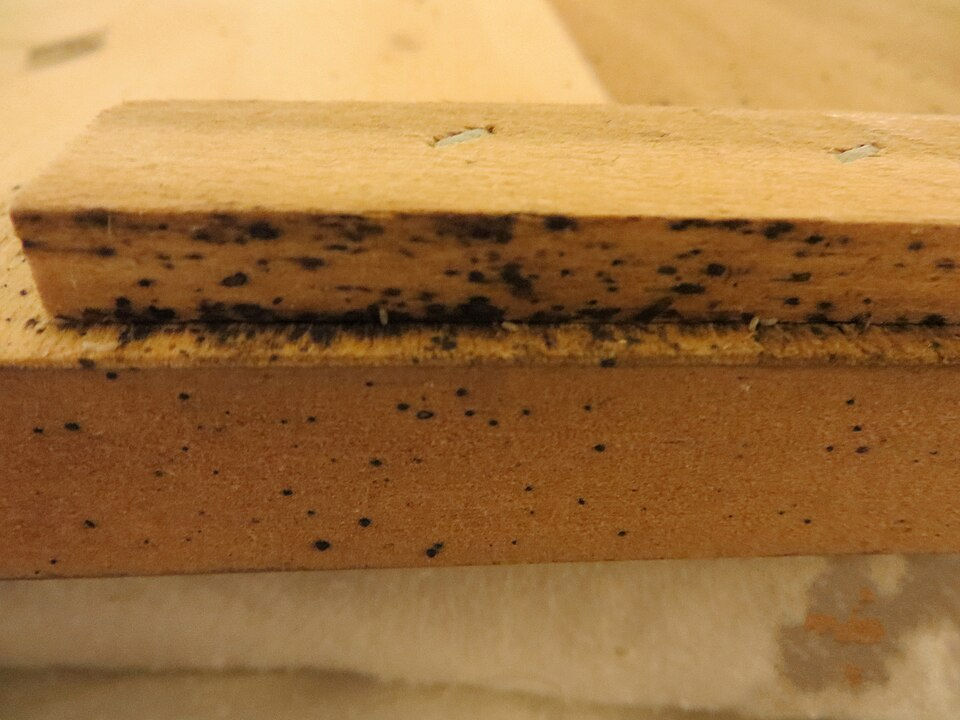
Fecal matter — looks like ground pepper but blotchy. On fabric it soaks in and spreads. On wood it sits similarly. Dark irregular spots in the seams and corners are a red flag.
Eggs — very difficult to see. About the size of a grain of sand, shaped like a tiny grain of rice. Whitish and sticky.
If you're finding any combination of these — especially cuticles and fecal staining together — you're not dealing with a lone traveler. You have an established infestation.

More about lone travelers
There's something people say that I want to address — "where there's one, there's thousands."
That's not always true.
If you find a single bed bug, there's a 50% chance it's male. A male bed bug can bite you repeatedly and make your life miserable, but without a female it cannot reproduce. Just one very unwelcome house guest.
One bed bug will torture you. It does not mean you have thousands.
I might panic too if I found a single bed bug at home. Sometimes the worst is true. But sometimes you intercepted a lone traveler before it became a problem. The only way to know is a proper inspection by a trained professional. I will share some preventative measure at the end.
Understanding the bites
In my training I learned that only 52% of people have a reaction to bed bug bites. That means nearly half the people living with bed bugs have no bites.
In my experience, people with more sensitive or fair skin tend to be among those who get an immediate physical reaction. The 48% of people with no reaction can lead to the infestation spreading. Eventually you will get bite marks because this is your body telling you that's something is wrong.
Bed bug season overlaps with mosquito season, and their bites individually look similar. Sometime there is a difference.
Mosquitoes tend to bite exposed areas — arms, legs, back if your shirt is off. Bed bugs have no such preference. They'll bite the tip of your ear, the top of your eyebrow, your knuckles. Anywhere your skin is accessible while you sleep.
But the most reliable indicator is the pattern. Dermatologists call it breakfast, lunch, and dinner. Bed bugs almost always feed in a three-bite sequence.
Here's why — they anesthetize the skin before feeding. They feed, move slightly, anesthetize again, feed again, and repeat. By the time they finish the third bite, the anesthesia from the first is already wearing off. That's when the itching starts and they make their exit.
There's something else worth knowing. Bed bugs don't crawl onto you — they crawl up to you. Unlike fleas or ticks that will walk across your skin, bed bugs are far more stealthy. They feed at the point where your skin meets the surface of the bed. That's why bites are typically found on the side of your body you're sleeping on. And it's also why the bites often appear in a line — they're following the edge where your skin meets the mattress, feeding in sequence as they move along it.
There are other bugs that bite that are not blood feeders. Defensive bites from a spider or centipede can happen when someone rolls on to one of these creatures when sleeping. Or if you happen to be where stubborn ants are feeding they may also attack you. Please don't eat in bed.
As a professional pest control expert I am not trained to identify a bug by a bite but rather the other evidence that is available. A dermatologist is trained to identify if you have a bug bite or something else going on.
Both bed bugs and mosquitoes are drawn to the carbon dioxide we exhale. That means bed bugs tend to establish themselves closest to where you breathe. Infestations usually start at the pillows, the top of the mattress, the headboard, and the bed frame closest to where you are giving off carbon dioxide.
The folds where fabrics come together, edges, corners, and tight seams are places bed bugs like. They prefer fabric over wood but will nest in both.
Can I get rid of bed bugs myself?
People spend a lot of money on do it yourself remedies. I've seen customers who spent seven or eight hundred dollars on products from Amazon and Home Depot before I even enter the picture and still pay me to do the work. By the time they called a professional the infestation had spread significantly, and the cost of treatment was much higher than if they'd called me first. Most bed bug companies do have an inspection fee for bed bugs because of the risk of an employee taking them home. At Pest Platoon this fee behaves as a deposit if treatment is necessary. My professional advice is save some money and have us do an inspection first.
A brief history — and why most mattress covers don't work
Bed bugs are a relatively modern problem in the United States. Around the year 2000 they started to appear and the industry didn't know what to do. Most of us didn't believe they were real at first. Bed bugs? Like, "Sleep tight. Don't let the bed bugs bite?"
Other countries without pesticide regulations had been using DDT and Chlordane on bed bugs for decades. Those bed bugs built up a high resistance to pesticides over generations.
Two things were happening simultaneously at the turn of the 21st century. International migration to America was increasing, and the Internet was changing everything. For the first time, products were arriving directly to American doorsteps from manufacturers around the world. Packages from regions where bed bugs were very active were coming into American homes — and the bed bugs came with them.
In the early days when effective treatments didn't exist, the zipper mattress cover was a containment strategy — a prison. Keep them from spreading, while the industry figured out how to kill them.
The problem is that a single small hole — and I've seen them develop within the first week of use. That's enough for bed bugs to escape. I have also seen bed bugs living on the outside of these covers.
By around 2007 the EPA was considering lifting regulations on DDT specifically for bed bug treatment. That never happened. But over time, bed bugs in the US were no longer exposed to those chemicals. Their resistance dropped, and treatment technology improved.
What NOT to do when you think you're being bitten
This is important — and it's where most people make the problem worse.
When people start getting bitten they move. They abandon the bed for the couch, or migrate to a guest room. Sometimes even on the floor with a blanket. It is completely natural. Get away from them.
But bed bugs find you. They follow the carbon dioxide you exhale and the heat your body produces. All moving does is give them a reason to spread to a new area of your home. What started in one room can now spread to two.
Stay in your bed.
I know that's an uncomfortable thing to ask. But while you're waiting for an inspection, here's what you can do. Get 90% isopropyl alcohol — the higher the concentration the better — and spray down everything using a windex type bottle. The mattress, the box spring, the bed frame, the pillows, all of it. Make it wet. It evaporates quickly and won't make you sick. At that concentration alcohol kills all bugs on contact and may also desiccate the eggs.
It's not a treatment. A treatment uses products that are meant to last over time. Alcohol evaporates quickly and leaves no residual. It's something useful you can do while you wait for a professional.
Are bed bug bites dangerous?
No. There is no known disease linked to bed bug bites. For a blood-feeding insect that has been tormenting humans for a very long time, that's unusual.
Mosquitoes are the deadliest animal on the planet — responsible for more human deaths than any other creature through out history through the diseases they transmit. Fleas were the vector for the bubonic plague, which killed a third of Europe. Both are blood feeders, just like bed bugs.
And yet bed bugs transmit nothing. They are one of the least dangerous blood-feeding insects in existence.
What they do instead is psychological. They find you in the places you feel safe.
That violation is different, but fortunately not life threatening. That's what makes bed bugs harder to deal with than almost any other pest. This is where my talking people off chairs skills matter. Knowledge diffuses ignorance, and ignorance causes fear.
What does professional treatment involve?
The most important thing I can tell you is this — a professional treatment should be guaranteed. If the company you're hiring won't stand behind their work, find someone who will.
What separates a professional from everyone else is the inspection. A proper inspection tells you exactly what you're dealing with. And what you're dealing with determines what's actually necessary.
One of the biggest problems in this industry is overselling. People hear "bed bugs" and assume they're looking at a massive treatment plan and a bill in the thousands. That's not always the case. The scope of treatment should be determined by the scope of the problem — not by what generates the most revenue.
Pest Platoon does not give a price over the phone for bed bugs. We need to see what we're dealing with before giving a quote for our service.
How long until they're gone?
Most treatments are effective the moment they're complete.
Though I've heard of bugs found inside the cardboard tube of a dry cleaning hanger. You don't know what you don't know.
Pest Platoon only does complete treatments. That includes any place people may sleep. If only one area is treated and bed bugs spread to another area, we would have to give an additional charge, and additional treatments, and neither of us will be happy with that outcome. It's actually more affordable to do it all in one treatment.
Smaller infestations tend to get quicker results from treatments. Larger, more established infestations take longer and sometimes require follow-up. During the inspection this will be established and Pest Platoon will give you clear expectations.
How can bed bugs be prevented?
Here are two approaches to prevention.
The first is preventative chemical treatment. This is an expensive option that is best for places with high turn over rates, such as hotels and other short term rental business. It's a good option for landlords between tenants too.
The second is a more affordable option. Active Guard mattress liner by Allergetech. Treated with permethrin, considered a green product, and guaranteed for three years. At around a hundred dollars it's a great investment you can make against bed bugs.
I've had them on my own bed for up to seven years with out any incidents. And I have a much higher chance than most people of bringing bed bugs home.
What I tell my customers
Bed bugs are manageable, and catching them early makes all the difference.
If you think you have a problem — don't move to the couch, don't spend hundreds on products that won't work, and don't wait. Call Pest Platoon at 610-497-2300 for a free inspection.

Comments